Project context
Architecture, location, infrastructure and delivery phases.
BIG FISH · Construction and property
Websites for developers, contractors and property operators. Combine architectural presentation with property selection, enquiries and collaboration workspaces.
Design × industry workflow
FROM WEBSITE TO SERVICE
Architecture, location, infrastructure and delivery phases.
Plans, specifications and consistent availability records.
Milestones, defects and accepted quantities in one process.
INTERACTIVE EXAMPLE
Try the journey “Project and phase → Contractor report → Review open issues → Accept quantity”. Change the inputs to see when the next step becomes available.
An educational model with fictional companies, values and rules. All actions stay in the browser; no data is submitted. This illustrates a possible solution, not a connected system or a client case study.
INPUT
WORKFLOW RESULT
Enable JavaScript to use the example.
WORKFLOW
| Layer | Responsibility |
|---|---|
| Website and interface | Presents the product, explains conditions and guides the action. |
| Application server | Checks permissions, valid transitions and repeated requests. |
| Business systems | Confirm authoritative data within the agreed exchange scope. |
| Responsible people | Make decisions requiring professional assessment and approval. |
BIG FISH · CONSTRUCTION
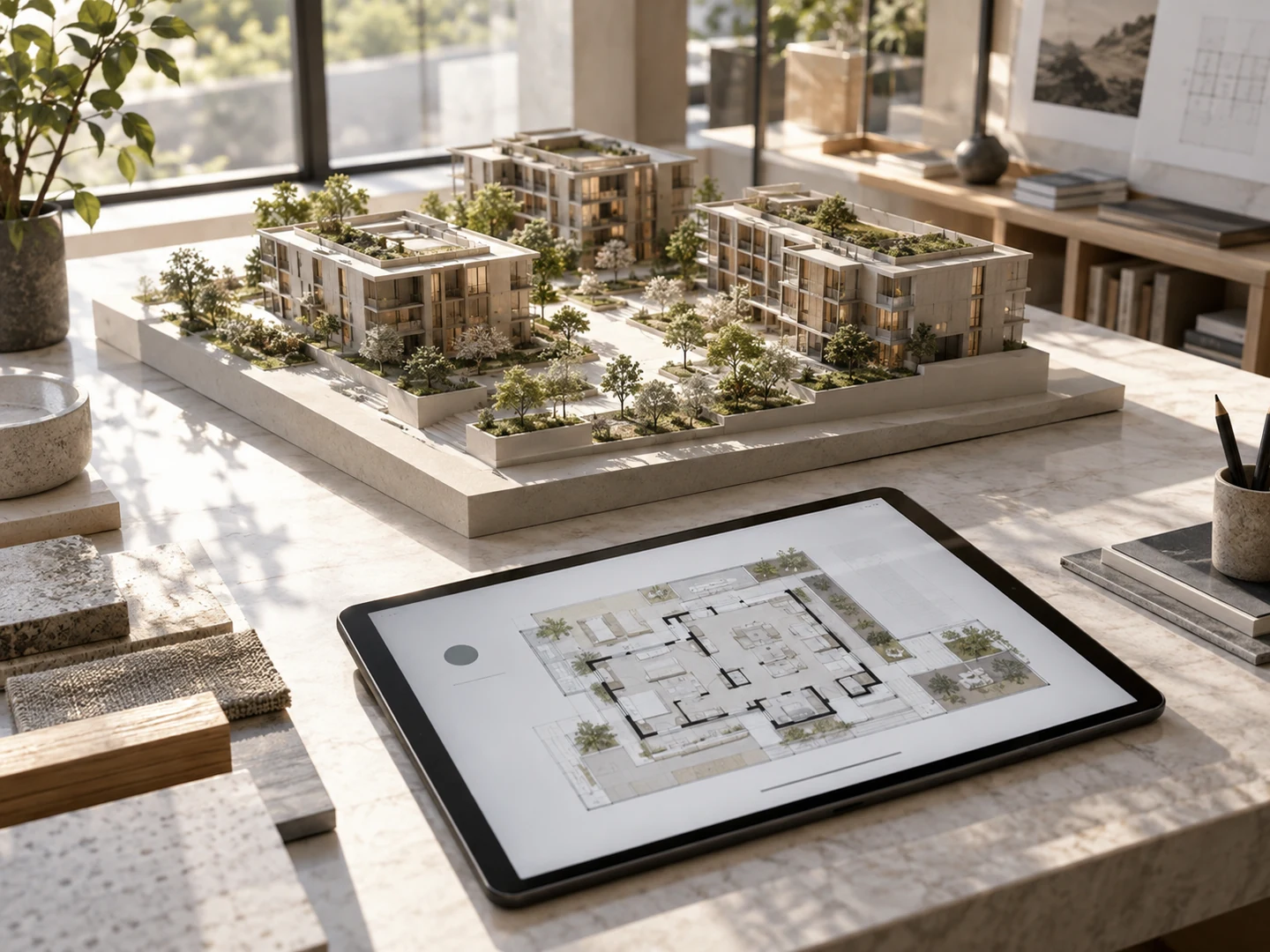
For property developers, we design selection through the master plan, building, floor and layout. Area, price and availability remain visible alongside architectural imagery. Switching between a plan and a list preserves the search criteria.
A construction portal shows project stages, acceptance documents, issues and responsible team members. Site photographs connect to specific work items, while approvals have clear deadlines and states. The visual system serves both buyers and delivery teams.
SOLUTION GUIDE
Design decisions, data, permissions and acceptance checks. Exact business rules and integrations are defined for your organisation.
Construction and property / 01
Architecture, plans and neighbourhood context communicate the character of a development. Visitors must still find the right building, unit or project type quickly. Distinguish renders from photographs of completed work. Availability should be linked to the property register rather than manually drawn onto an image.
During design, document representative screens and expected user actions. For each decision, identify what editors maintain, what comes from another system and who owns its freshness.
Acceptance check: A first-time mobile visitor can find the relevant service and next step.
Construction and property / 02
The workflow connects these stages: Project and phase → Contractor report → Review open issues → Accept quantity. Each transition has an owner, inputs and a visible result. Before implementation, map the normal journey, correction, cancellation and repeated actions. Interface status must represent a confirmed state rather than a button click.
Acceptance check: Returns and retries preserve input without duplicating the result.
Construction and property / 03
A project contains buildings, units or phases; a construction stage contains work items and supporting evidence. Store planned, reported and accepted quantities separately. Each issue references a task, location and owner. Closing an issue retains its history, and resubmitting a report does not double completed quantities.
Acceptance check: Reference data changes do not overwrite an agreed document.
Construction and property / 04
Buyers see the public catalogue, contractors assigned contract work and the client team submitted reports. Financial details and estimates have separate permissions. The demo blocks acceptance while an issue remains open; actual acceptance authority follows the company’s agreed contracts and procedures.
Acceptance check: A different organisation cannot retrieve a restricted file by direct URL.
Construction and property / 05
Unit status may come from CRM, drawings from an approved repository and work progress from an internal platform. Recheck current property availability on the server when reserving. If synchronisation is delayed, show freshness information rather than promising a unit from an outdated listing.
Acceptance check: An unavailable source never appears as a confirmed success.
Construction and property / 06
For long operations, acknowledge receipt and retain the result identifier. Retrying after a connection loss must not create a second record. Separate user-correctable errors from cases requiring a specialist, preserving input under the agreed handling rules. Design empty, loading, forbidden and unavailable states before implementation rather than after launch.
Acceptance check: A repeated event does not apply an operation twice.
Construction and property / 07
Developers need project, property-type and neighbourhood pages; contractors need expertise and completed work. Control filter-generated duplicates. Preserve valuable project URLs during migration and redirect replacements. The target action follows the business model: consultation, viewing or quotation request.
Acceptance check: Search and filters lead to useful pages without endless duplicates.
Construction and property / 08
The first release covers the complete journey from “Project and phase” to “Accept quantity”, supporting pages and editable fields. Test mobile views, roles, forms, documents and integration failures in staging. Save the previous state and define rollback before switching. Handover includes editor instructions, the exchange design and a checklist for future releases.
Acceptance check: Recovery has been tested on a copy, and editors can maintain fields independently.
FAQ
Yes. Start with structure, design, content and a complete enquiry journey. Design catalogue entities and identifiers with the future portal in mind to avoid another data migration.
We first inspect the supported interface, permissions and test environment. Then agree data scope and system responsibilities. If no suitable API exists, assess an alternative and its limitations separately.
Page types, content volume, roles, integrations and first-release scope. Discovery produces a structure, prototype and staged estimate. This page’s demonstration is neither a finished system nor a fixed-price promise.
Start with business objectives, website structure and the workflow that needs a better experience.
Your enquiry has been sent. We will contact you to discuss the project.