Polaris Review
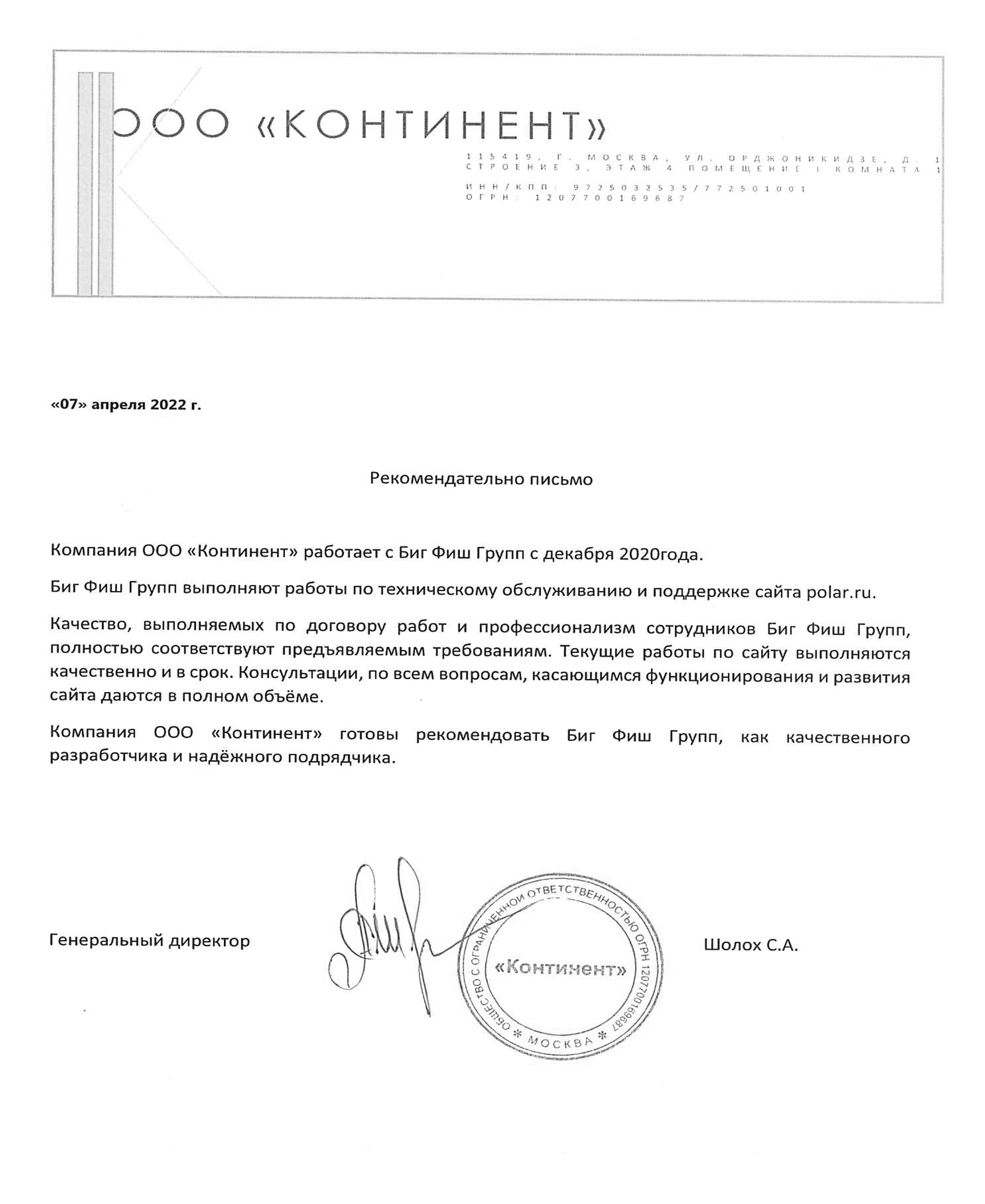
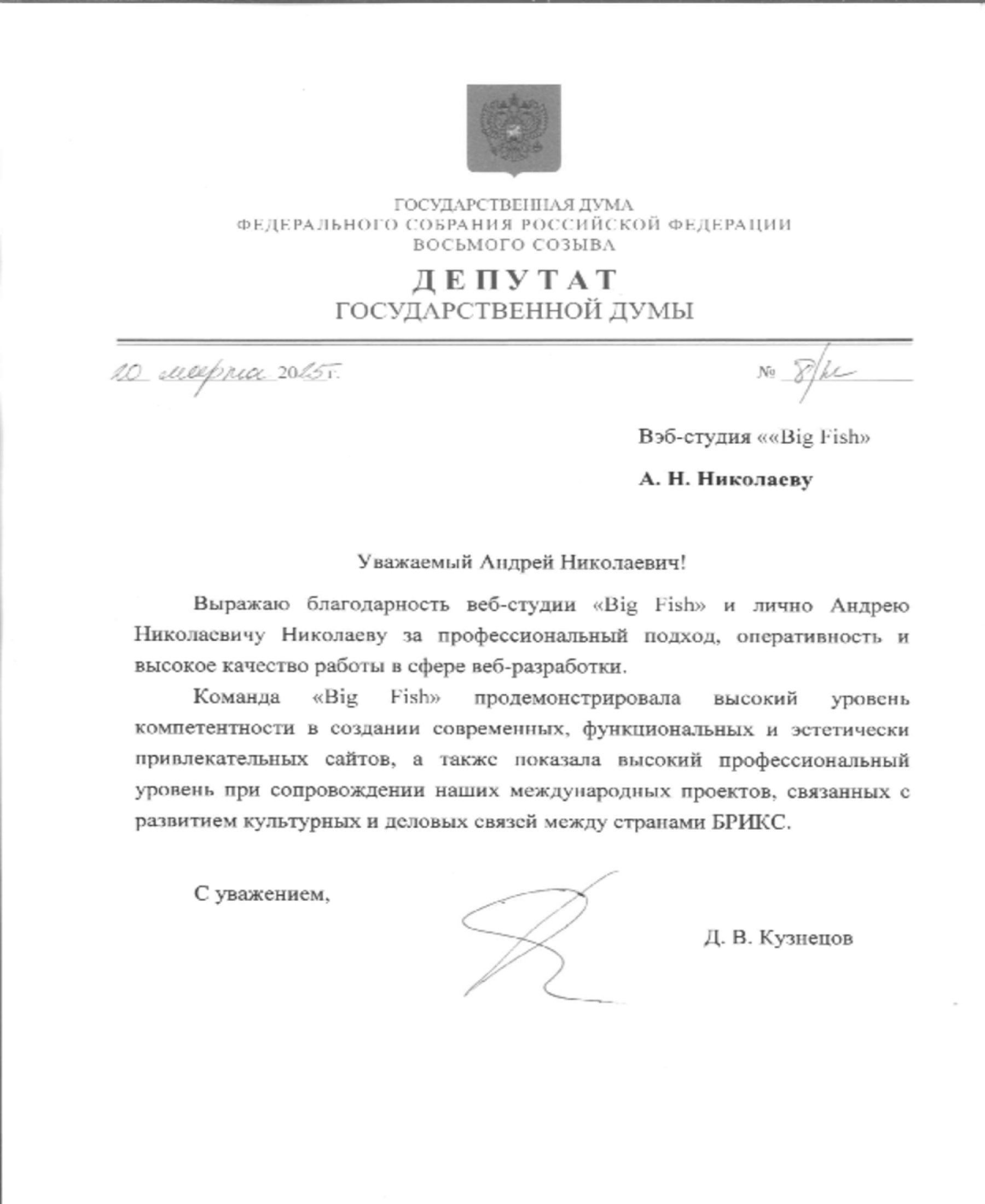
Letter of recommendation from the well-known POLARIS brand
Strong product and e-commerce teams, from CMS websites to AI services

Minsk differs from many regional markets because several development models coexist here. Traditional studios build with WordPress, MODX, Drupal, OpenCart and 1C-Bitrix; product teams work with React, Next.js and custom services; branding agencies combine identity, UX/UI, 3D and web design; smaller studios focus on SEO and lead generation. Public portfolios include pharmacy chains, automotive brands, government organizations, medical businesses, retail, delivery services, online stores, mobile products and AI-assisted search. As a result, ordering a website in Minsk can mean anything from a small landing page priced in the hundreds of Belarusian rubles to a headless store, portal or integrated web application.
The city is especially interesting because the technology stack is not uniform. SiteLab publishes Next.js projects built over OpenCart and its own AI pipelines; Lamanteam connects OpenCart and MODX to CRM, 1C, delivery systems and customer accounts; BrainCloud uses WordPress, MODX, Symfony and 1C-Bitrix; Trisoft retains strong Drupal expertise and develops integration modules. At the same time Moloko, Bystyle, Yudgin Studio and Themost Studio operate at the intersection of branding, interfaces, 3D and web design. A client should therefore choose a contractor according to the architecture of the task rather than a generic need to “make a website.”
Big Fish Digital (BFD) approaches this type of market from the perspective of complete website development: design, frontend, backend, CMS, databases, APIs and integrations should form one architecture. For complex systems, combinations such as Laravel + Vue.js + a database + REST API are useful; for content-heavy corporate websites a well-chosen CMS is often more appropriate. Minsk has teams for both ends of that spectrum.

Минский рынок веб-разработки заметно неоднороден: рядом работают студии, специализирующиеся на корпоративных сайтах и интернет-магазинах, продуктовые команды, разработчики сложных веб-сервисов и агентства с сильным акцентом на дизайн. В портфолио местных компаний встречаются проекты на 1С-Битрикс, WordPress и других CMS, а также решения на React, Vue.js, Laravel, Node.js и собственных технологических стеках. Поэтому различия между студиями лучше всего видны не по общему перечню услуг, а по конкретным проектам, используемым технологиям, интеграциям и масштабу реализованных систем.
SiteLab has worked in Minsk since 2009 and reports more than 126 launched projects. In 2026 it delivered a website and custom CMS for the DominantaFarm pharmacy network, with 46 pharmacies in the managed database and 45 screens and states designed in Figma. For DTL.by, the team built a headless store with Next.js over OpenCart. Its AI-assisted product selector covers more than 1,377 items, while a heavy AI request was reduced from roughly 24 seconds to about 5 seconds. This is closer to product engineering than to conventional CMS website production.
For Ermakov Media, SiteLab created an AI-assisted promotional-product selector based on more than 17,000 available product cards and 3,070 canonical models without duplicates; a separate calculator handles more than ten order parameters. For Planck Media, it built an automated AI content pipeline with over 2,200 published materials and 69 categories. The public technology profile includes Next.js, OpenCart, custom CMS work, integrations and AI services.
Lamanteam has worked since 2014 and reports more than 200 completed projects. Its portfolio includes a website for car dealer ROX with Bitrix24 integration, a vehicle catalog and dealer-location map; a pharmaceutical website for Lamyra with a product catalog, multilingual content and a content constructor; and the be:ra menswear store. The latter includes a customer account, online payments, delivery integration and MySklad synchronization.
For Originalmarket.es, the studio combined a catalog, customer account, delivery calculation, CRM integration, loyalty features and multilingual content. Lamanteam publicly lists OpenCart, MODX, Yii and Vue, and separately describes 1C, CRM and third-party integrations for OpenCart stores. The company gives an average development period of three to four months, which reflects a full team process rather than a quick template build.
REDLINE has operated for more than ten years, reports 300+ projects and has a strong 1C-Bitrix specialization. Its portfolio includes stores and catalogs for E-pack, TENGEN, Star-k, DOMINO and Brass Lamp, corporate websites for Belenergosvyaz and manufacturing companies, and clients such as BELAZ, BELGIE, TechnoNICOL, CDEK and Belarusfilm. For Bumazhnaya Kompaniya, REDLINE reworked catalog structure and landing pages; its published case describes traffic eventually reaching about 20,000 visits per month after continued SEO development.
REDLINE documents 1C-Bitrix particularly well and has been a Gold Partner of the platform for years. Its services include synchronization with 1C, payment connections, website improvement and support. This makes the studio representative of the corporate side of the Minsk market, where a website often has to work with inventory, catalogs, SEO and long-term maintenance rather than stand alone as a marketing page.
BrainCloud reports nine years of operation and 136 developed websites. Its portfolio demonstrates a broad CMS mix: the “Davayte rasti” corporate site uses WordPress, the Adizes Institute in Belarus uses MODX Revolution, the MITSO internet portal uses Symfony, and the Stant Fastener Technology store uses 1C-Bitrix. The Belarus State Circus site was built on WordPress, Novus Kitchens on MODX Revolution, and Asterabel on OpenCart.
The stack therefore varies by task rather than by one preferred platform. Symfony supports custom portal logic, OpenCart covers catalog and commerce scenarios, while WordPress and MODX fit managed corporate content. BrainCloud also publishes starting prices of 960 BYN for a landing page, 1,600 BYN for a corporate site, 2,880 BYN for an online store and 7,680 BYN for a web portal, making it useful as a price reference for the lower and middle parts of the market.
Trisoft was founded in 2009 and reports more than 100 projects for over 70 organizations. Its portfolio includes an integration module for the Oplati payment service, the Snabdim.by online store, a redesign for bogemia.by, websites for the Eva women’s clinic, Usmile family entertainment park, Eleos rehabilitation center and Cordis medical center. The studio also developed the House of Mercy project, which received TIBO recognition, and launched a website for the Minsk branch of Belarusian Railways.
Drupal is the company’s main publicly stated CMS, while 1C-Bitrix, WordPress, Joomla and MODX are also supported. Trisoft also mentions integrations with 1C and other systems. Its value on the Minsk market is not a long list of trendy frameworks but long-term experience with content-rich and institutional projects where custom modules, forms, integrations and maintainability matter.
Web Modern is based in Minsk and combines development with digital promotion. Its portfolio includes a Peugeot 3008 promotional page with web design, responsive layout and WordPress development; the masculan brand website on WordPress; the UNIHELP charity website; and the Giving Tuesday campaign website. For Dominfo, the studio explicitly states framework-based development rather than a CMS template.
The company also offers CRM implementation and online-store development. Most documented projects use WordPress, which makes Web Modern easy to evaluate for marketing and corporate websites that need design and promotion together. Peugeot, UNIHELP and Giving Tuesday show a useful range from commercial promotion to social campaigns.
E-NOT.by combines website and mobile development. The studio lists React, PHP, JavaScript and WordPress for web work, and Swift, Kotlin/Java, React Native and Flutter for mobile products. It also offers 1C integrations, CRM implementation, online payments, API connections and DATAMARK integration. Public portfolio categories include online stores, corporate sites, landing pages and multi-page websites.
Its published price guide starts at 500 BYN for a landing page, 1,000 BYN for a corporate website and 3,000 BYN for an online store. Mobile apps begin at 5,000 BYN, with more complex products priced higher. E-NOT is notable for combining entry-level web pricing with a modern frontend and mobile stack, although clients should request a closely matching case because the public portfolio descriptions are less detailed than its technology pages.
CodeBerry lists SwissTime, TimeCity, Victorinox Belarus, itx.by, ABN-GROUP, Spektr shopping center, TotalLab and Empros in its portfolio. The range suggests work across retail, corporate and branded digital projects rather than only landing pages. A separate case presents the Lightroom Presets — Light Box mobile app for Scep Group LLC, built around filter and preset packages for photo editing.
The public website reveals less technical architecture than some larger competitors, so stack decisions should be confirmed during proposal review. Still, the presence of watch brands, Victorinox and a standalone mobile product indicates two clear directions: business websites and product interfaces. The portfolio is useful for initial selection, while the exact frontend, backend and CMS choices should be written into the scope.
Reactive Technologies is based in Minsk and works on corporate websites, e-commerce, portals, promotional sites and branding. Public work includes websites for Display Design Bureau, Pharm Technology, Bomakstroy and Serbetli, as well as brand books for BelMarshrut-TV and Serbetli. The portfolio is particularly relevant to industrial and B2B clients, which form a visible part of the Belarusian corporate market.
The company does not publish detailed technology stacks for every case, so development claims should be separated from design work when evaluating a proposal. Its strongest public evidence is the industry mix: manufacturing, pharmaceuticals and engineering, where sites often require large catalogs, technical content and carefully designed information architecture.
Moloko is a Minsk creative agency with a strong branding core, while website production appears as part of its broader brand-development process. Public work includes projects for KFC, Finteqhub, Emall, CTDev, iFly Minsk and Pexip. The KFC project involved AR and an advertising campaign, Finteqhub received a rebrand, and Emall work included campaign communication and animation.
Moloko is therefore better understood as a branding and creative partner than as a conventional website factory. For a new brand or major redesign, that approach can be valuable because web design grows out of positioning and a visual system. For a purely technical catalog or internal portal, a more engineering-oriented studio may be more appropriate.
Bystyle positions itself as a Minsk web-design studio with 16 years of experience, covering website and app design, branding, presentations, 3D and animation. Its public materials emphasize complex visual projects, video, neural-network tools and 3D, with clients in Belarus, Russia and the EU.
Published prices provide a useful market reference: website design starts at about 900 BYN, a turnkey website at about 3,350 BYN, and mobile-app design at about 550 BYN. Bystyle is most relevant when visual quality and interactivity matter more than a standard CMS. For projects with heavy backend logic, databases or integrations, the client should clarify who owns the engineering part and which stack will be used.
JetAero is a compact Minsk team building landing pages, corporate websites and online stores. Its portfolio names Fine Auto, Applenew.by, PRESTIGE AUTO, EasyTransfer24, Aerotruba.by and AUTO-DESK. The studio links the AUTO-DESK case to a 52% increase in leads, while Applenew.by centers on electronics catalog and device-selection scenarios. The client mix suggests a focus on small and medium-sized businesses, automotive companies and service providers.
The team publicly lists PHP, Next.js, TypeScript, Python and Go, and mentions dashboards, bots, stores and WebApps. Starting prices are 600 BYN for a small business site, 900 BYN for a landing page and 1,100 BYN for a corporate site. It is a useful example of a small full-stack studio that can move from a marketing page toward custom logic without immediately changing contractors.
ITSHKA describes itself as a Minsk web studio with eight years of experience and more than 120 launched projects. It develops landing pages, corporate and information websites, online stores, course platforms and also provides support, SEO and contextual advertising. The business model is centered on a compact service set and direct communication rather than a large agency structure.
Public technology case studies are not as detailed as those of SiteLab or Lamanteam, so the studio should be evaluated through a relevant demonstration project before kickoff. Its service mix places it in the broad middle market: design, launch, promotion and ongoing support from one contractor, suitable for businesses that need a website rather than a dedicated product-development team.
InProcess has been building and promoting websites in Minsk for more than ten years. Its portfolio includes a corporate website for the Martin retail chain and a business site for Etnatechservice. The studio’s main platform is WordPress for business sites, stores, landing pages, catalogs, corporate websites and blogs; it also provides SEO, contextual advertising, graphic design and redesign.
A template-based website starts at 360 BYN, placing InProcess in the lower-priced segment. This is not the same product as a Next.js application or custom Laravel system. For a straightforward content or marketing site, WordPress can be an efficient choice; when comparing proposals, clients should remember that the low starting price refers to template-based work rather than a custom design system or complex commerce logic.
NO2 specializes in WordPress and MODX Revolution and publishes a starting project price of 960 BYN. Public materials include websites for a fitness trainer and a lawyer, while the broader service covers business and corporate websites on managed CMS platforms. The studio also states a six-month technical warranty.
NO2 is an example of focused specialization rather than a long list of frameworks. For a small corporate website this can be an advantage because maintenance, administration and future estimates are easier to predict. For a web application with complex roles, large databases or multiple integrations, clients should confirm whether the task fits the studio’s normal architecture.
Wizex calls itself a Minsk web-development studio combining design, websites, AI agents and sales automation. It builds corporate websites, stores, portals, landing pages and small business sites, while its AI work includes RAG systems, bots and calculators. One public project is a new website for a handmade marshmallow workshop, with the commercial goal of strengthening the brand and increasing sales.
The distinctive point is an attempt to make AI part of a business scenario rather than a decorative chat widget. In practice that may mean knowledge-base search, lead qualification, product selection or work with internal data. Because the studio is younger and has a smaller public portfolio than REDLINE or Lamanteam, architecture, data security and post-launch support deserve extra scrutiny.
DOKO Web operates in Minsk and combines website production with AI integration and business automation. A public UI/UX portfolio case covers a full personal website for a specialist: visual direction, service and pricing blocks, testimonials and a focused lead form. Other services include LLM and RAG assistants, CRM, email and knowledge bases, plus automation through APIs, spreadsheets, messengers, alerts and reporting.
The studio publishes a starting reference of about 6,000 BYN for AI integration and about 8,000 BYN for business automation. These figures are far above the price of a simple landing page and illustrate an important market distinction: connecting systems and data is a different class of work from publishing pages. DOKO Web is therefore more useful to compare with web-service development than with low-cost website packages.
Eskviz works in Minsk on small business websites, landing pages and multi-page projects, combining individual design with basic SEO preparation. The studio advertises a starting price of 890 BYN and very short timelines for simple builds, with an emphasis on owning the finished website rather than paying an ongoing website-builder subscription.
This places Eskviz in a different segment from SiteLab or Lamanteam. Its core use case is a marketing website where positioning, page structure, forms and advertising readiness matter more than custom backend architecture. For stores with 1C synchronization, customer accounts or API-heavy workflows, the client should ask exactly which platform and integration model will be used.
Yudgin Studio is a Minsk web studio with a visible UX/UI portfolio on Behance. Published work includes a website for an innovative engineering center, a job-search platform design and a hotel website redesign. The cases suggest an emphasis on interface design and presenting complex services rather than repeating one landing-page template.
The public portfolio explains design better than backend architecture, so Yudgin Studio is easier to evaluate on prototyping, UX/UI and visual systems than on server technology. That distinction matters for web applications: a strong interface and a strong data architecture are separate parts of the project. Within Minsk’s design segment, Yudgin adds a clear product-interface perspective.
Themost Studio is based in Minsk and combines branding, graphic design, UI/UX, 3D, motion, mobile, desktop and web development. Its portfolio includes Scooply.ai brand identity and mobile app work, PLEIAS, projects for QUOKKA FILMS and PROPS, and the studio’s own website. This is not a conventional CMS agency; digital products are part of a broader brand system.
The profile is well suited to launches where identity, website and application must be developed together. Scooply.ai demonstrates a combination of brand and mobile interface work rather than a single website page. As with many design-led studios, the backend stack should be confirmed for each project because the public portfolio explains visual work more thoroughly than server architecture.
Across the twenty studios, several recurring product groups stand out. Corporate websites and catalogs remain the largest layer, especially for manufacturing, medicine, education, pharmaceuticals, construction and services. WordPress, MODX, Drupal and 1C-Bitrix are common here. E-commerce forms a second major layer, with OpenCart, 1C-Bitrix and headless systems. A third layer covers product and integration work with Next.js, Symfony, AI search, CRM, 1C, APIs and custom server modules.
Landing pages remain a separate commercial product and are widely offered in the lower and middle segments, often starting around 360–960 BYN. Visually similar pages can still involve very different scopes. Custom website design, research, copywriting, analytics, CRM integration and campaign preparation can multiply the actual amount of work behind a single page.

WordPress остаётся самой заметной CMS в массовом сегменте: её используют Web Modern, BrainCloud, E-NOT, InProcess и другие команды. MODX встречается у Lamanteam, BrainCloud, NO2 и Трисофт. Drupal сохраняется как важная корпоративная технология у Трисофт. Для e-commerce заметны OpenCart и 1С-Битрикс; особенно показателен DTL.by, где SiteLab оставила OpenCart как торговый backend, а пользовательский интерфейс вынесла в Next.js.
WordPress is the most visible CMS in the mass market, used by Web Modern, BrainCloud, E-NOT, InProcess and others. MODX appears at Lamanteam, BrainCloud, NO2 and Trisoft. Drupal remains relevant through Trisoft. OpenCart and 1C-Bitrix are prominent in e-commerce. DTL.by is especially illustrative because SiteLab retained OpenCart as the commerce backend while moving the user interface to Next.js.
That headless model is useful when the CMS already handles products and orders well but the frontend needs more speed or custom behavior. The principle is similar to the architecture BFD uses in Laravel and Vue.js development: the interface communicates through an API, the backend handles business rules and data is stored separately. In that model the CMS becomes one component rather than the entire application.

Лучше всего уровень минского рынка виден не по списку услуг, а по нескольким проектам, где дизайн соединён с данными, каталогом, интеграциями или измеримым результатом. Ниже — кейсы разных типов: аптечная сеть, headless-магазин, e-commerce с учётом и логистикой, образовательный портал и проект на 1С-Битрикс.
Integrations are another recurring Minsk theme. Lamanteam publishes cases with Bitrix24, MySklad, 1C, CRM and delivery services; REDLINE works with 1C and Bitrix; E-NOT lists CRM, 1C, payments and DATAMARK; DOKO Web works with APIs, CRM, knowledge bases and AI. In any integrated project, the estimate should explicitly include data structures, error handling, logging and testing rather than one generic line called “integration.”
The level of the market is easiest to understand through projects where design is connected to catalogs, data, integrations or measurable outcomes. The examples below cover a pharmacy network, a headless store, an e-commerce project with inventory and logistics, an educational portal and a 1C-Bitrix commerce build.
DTL.by is a headless store: OpenCart remains responsible for commerce management while Next.js powers the frontend. The project includes AI-assisted selection by use case and budget across more than 1,377 items. This allows the team to retain a mature commerce backend while developing a separate, faster interface and custom search logic.
The strongest published metric is the reduction of a heavy AI request from roughly 24 seconds to about 5 seconds, close to a 4.8x improvement. For e-commerce, that matters more than decorative effects because the recommendation flow must respond before the shopper abandons it. The case demonstrates local expertise in performance, AI and system separation.
The be:ra menswear store combines a catalog, customer account, online payments, delivery integration and a content constructor. A central technical element is MySklad integration, which links the online storefront with inventory and operational data while keeping the customer-facing experience simple.
This case explains why serious e-commerce costs more than a set of product cards and a shopping cart. Developers must define catalog structure, order statuses, inventory exchange, delivery and payment flows, failure scenarios and administration. Most of that complexity is invisible in the finished design but essential to the business.
BrainCloud developed the MITSO internet portal on Symfony. Choosing a framework instead of a standard CMS points to a different class of task: a portal generally requires more custom modules and business logic than a corporate website where administrators mostly edit pages and news. Symfony provides a server-side foundation for those scenarios.
The same BrainCloud portfolio includes WordPress, MODX, OpenCart and 1C-Bitrix, so MITSO is a useful example of selecting a platform according to the problem rather than forcing one technology everywhere. Portal clients should ask a contractor to explain why a CMS is sufficient or why framework development is justified.
For Bumazhnaya Kompaniya, REDLINE worked on catalog architecture, landing pages, internal linking and SEO preparation. The published case says initial optimization brought traffic to around 3,000 monthly users, while continued website and search development eventually increased monthly visits to about 20,000.

Открытые прайсы показывают очень широкий диапазон. InProcess предлагает шаблонные сайты от 360 BYN. E-NOT указывает лендинг от 500 BYN, корпоративный сайт от 1000 BYN и интернет-магазин от 3000 BYN. JetAero публикует цены от 600 BYN за сайт-визитку, от 900 BYN за лендинг и от 1100 BYN за корпоративный сайт. BrainCloud — от 960 BYN за лендинг, от 1600 BYN за корпоративный сайт, от 2880 BYN за магазин и от 7680 BYN за портал.
The project is important because it shows a website as a long-term sales and acquisition system. Catalog architecture affects both navigation and which product and information pages can rank. When SEO is a major acquisition channel, the site structure should be designed before frontend production rather than added later.
BrainCloud built the Stant Fastener Technology online store on 1C-Bitrix. In B2B commerce the platform is useful when a large catalog, commercial workflows and accounting-system integration matter. Compared with the studio’s simpler WordPress projects, this case represents the transition from a content site to a commerce system.
1C-Bitrix is not automatically a sign of complexity, but it becomes justified when the project includes large catalogs, price types, 1C exchange, user roles or sales automation. Similar work appears across several Minsk studios, making Bitrix an important part of the local corporate market.
Public price lists show a very wide range. InProcess starts template-based websites at 360 BYN. E-NOT lists landing pages from 500 BYN, corporate websites from 1,000 BYN and online stores from 3,000 BYN. JetAero starts at 600 BYN for a small business site, 900 BYN for a landing page and 1,100 BYN for a corporate website. BrainCloud starts at 960 BYN for a landing page, 1,600 BYN for a corporate site, 2,880 BYN for a store and 7,680 BYN for a portal.
In the design-led segment, Bystyle lists a turnkey site from about 3,350 BYN. DOKO Web quotes AI integration from about 6,000 BYN and business automation from about 8,000 BYN. These are different products: the latter budgets cover data connections, APIs, access rules, automation logic and testing, not just pages. The question “how much does a website cost in Minsk?” is therefore meaningful only after defining the architecture.
A practical model is to separate four levels. A simple landing page or service site may start around 500–1,500 BYN in the budget segment. A custom corporate website often begins around 1,500–4,000 BYN and rises with design and content volume. Online stores start around 3,000 BYN on a standard CMS and become much more expensive with warehouse, CRM, 1C and delivery synchronization. Web applications, portals and headless commerce normally require an individual estimate.
When comparing turnkey website prices, clients should compare scope rather than one total number. The same 3,000 BYN can mean a custom prototype, design system, responsive layouts, CMS, content migration and testing in one proposal, or a template and contact form in another.

Для сложного e-commerce в первую очередь стоит смотреть SiteLab, Lamanteam, REDLINE и BrainCloud: у них есть опубликованные магазины, CMS, интеграции и технологические кейсы. Для корпоративного сайта с большой контентной частью сильны Трисофт, Reactive Technologies, REDLINE и Web Modern. Если ключевой приоритет — бренд, визуальная система, 3D и выразительный интерфейс, логичнее сравнивать Moloko, Bystyle, Yudgin Studio и Themost Studio.
Professional development begins before design. The team first defines business goals, audience, competitors, catalog or service structure and user scenarios. Information architecture and prototypes come next, followed by the visual system. For a large site, a design system is a separate body of work covering controls, forms, tables, filters, cards, loading and error states, and mobile behavior.
After design come frontend and backend implementation. A CMS handles much of the server-side work for content websites; a web application requires roles, authorization, business rules, APIs and database design. BFD often builds such systems with Laravel, Vue.js, PostgreSQL or MySQL and external integrations. When 1C, CRM or inventory systems are involved, data exchange should be designed and tested as its own module.
Before launch, teams perform responsive and browser testing, check forms and integrations, migrate content and complete technical SEO work: redirects, metadata, canonicals, sitemap.xml, robots.txt, Schema.org, HTTP codes and internal links. That is why professional turnkey website development is much more than “design, code, done.”
For complex e-commerce, SiteLab, Lamanteam, REDLINE and BrainCloud deserve the closest review because they publish stores, integrations and concrete technology cases. For large corporate websites, Trisoft, Reactive Technologies, REDLINE and Web Modern have relevant public work. If brand identity, 3D and expressive interface design are the priority, Moloko, Bystyle, Yudgin Studio and Themost Studio form a more relevant comparison group.
For smaller businesses and tighter budgets, JetAero, InProcess, Eskviz, NO2 and ITSHKA occupy the more accessible part of the market. In that segment it is often more rational to launch a well-structured site on a mature CMS than to commission a custom platform. For AI, internal knowledge and automation, SiteLab, Wizex and DOKO Web stand out.
The most useful selection method is to request a project with similar architecture, not just similar visuals. An online store with 1C should be compared with another store integrated with 1C; a portal with another portal; and a customer account with a case that already required roles, data and APIs. That quickly separates demonstrated technical expertise from general portfolio presentation.
Work rarely ends at launch. Online stores need new payment and delivery options, corporate websites require sections and language versions, and services acquire new roles and workflows. Lamanteam, REDLINE, BrainCloud, ITSHKA and other Minsk studios sell support separately because a project normally changes as the business changes.
Technical support is not only bug fixing. It includes CMS updates, backups, infrastructure monitoring, performance, security, API changes, integration maintenance, new landing pages and SEO development. When a website is part of sales or internal operations, an ongoing development budget should be planned before launch.
Minsk combines several traditions. One comes from classic CMS development and is strong in corporate websites, catalogs and e-commerce. Another is closer to product engineering and uses Next.js, Symfony, AI, APIs and headless architecture. A third comes from Belarus’s strong design culture and combines branding, interfaces, motion and 3D. The city is therefore interesting not simply because it has many studios, but because their production models differ substantially.
Integrations with local and corporate systems are particularly visible: 1C, Bitrix24, MySklad, payment systems, CRM, delivery services and industry databases. For clients, this matters more than an abstract list of programming languages. A modern corporate website increasingly acts as an interface over business data, so the real quality of the project depends on how reliably CRM, accounting, catalog data, databases and the user interface are connected.
Public pricing remains lower than in many large Western European capitals, but the spread within Minsk is already enormous. A 500–1,000 BYN website and an AI-powered headless store belong to the same industry only nominally. The most important selection criterion is therefore whether the studio’s documented experience matches the complexity of the actual project.
Frequently asked questions about web studios in Minsk
Public price lists start at roughly 360–960 BYN for simple websites, around 1,000–3,350 BYN and above for corporate projects, and about 2,880–3,000 BYN for basic online stores. Portals, headless commerce, AI and integration-heavy systems are usually quoted individually and cost substantially more.
WordPress, MODX, OpenCart and 1C-Bitrix appear frequently across the reviewed companies. Trisoft is strongly associated with Drupal, while Symfony and Next.js appear in more custom projects; some studios also separate the frontend from the CMS using a headless approach.
Lamanteam, REDLINE and BrainCloud are strong starting points because their public work includes OpenCart or 1C-Bitrix and integrations with 1C, CRM, Bitrix24, MySklad, payments and delivery services. SiteLab is particularly interesting for headless commerce and AI-assisted search.
Yes. SiteLab works with Next.js and AI services, BrainCloud publishes a Symfony portal, DOKO Web works with APIs, RAG and automation, and Wizex focuses on AI agents and business logic. For any complex system, request a case with similar architecture rather than only a visually similar website.
Public prices start at about 500 BYN at E-NOT, 900 BYN at JetAero and 960 BYN at BrainCloud. The final price rises when custom design, copywriting, animation, CRM integration, analytics and advertising preparation are included.
Moloko, Bystyle, Yudgin Studio and Themost Studio are among the most relevant teams when identity, UX/UI, 3D, motion or a broader brand launch matters in addition to development.
Yes. Many of the reviewed studios work with clients outside Belarus. The process is commonly handled through online briefing, video calls, Figma, staged delivery and remote access to a test environment.
Big Fish is an official partner of T-Bank, and we offer 12-month interest-free installment plans for projects up to 500,000 RUB.


We sign a contract and complete the project for you. Then you repay its cost to T-Bank in equal installments over 12 months.
Your application has been acceptedWe will contact you
soon.